
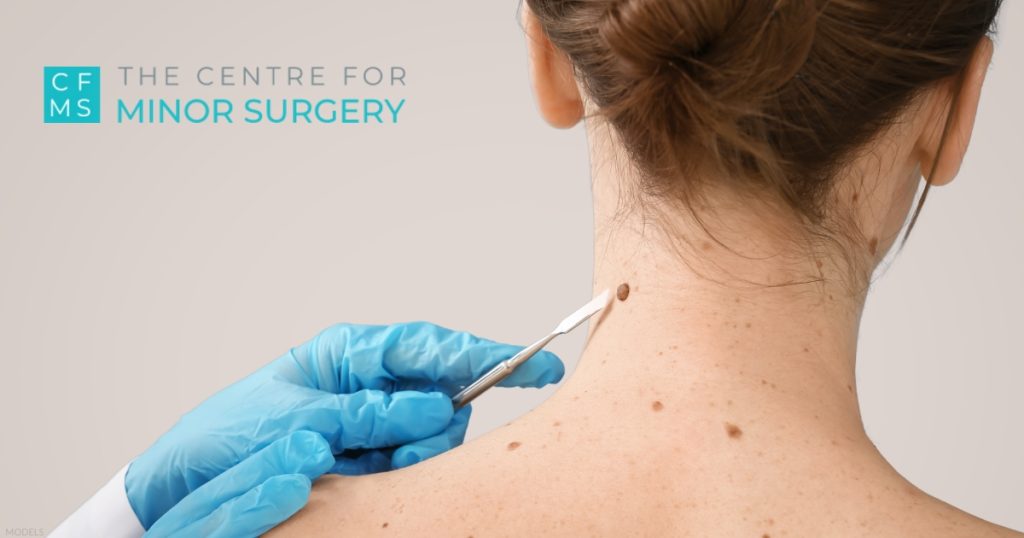
Mole removal usually does not hurt. Modern, minimal-scar techniques, like those used at The Centre for Minor Surgery, make the experience quicker and more comfortable than many patients expect. Below, we answer the most common questions patients have about mole removal, covering topics such as pain, recovery, and safety.
1. Does getting a mole removed hurt?
Before the procedure, your provider injects a local anesthetic to numb the area. You may feel a brief pinch from the injection, but once the area is numb, the removal itself is typically painless.
Whether the mole is removed with a shave technique or a surgical excision, our team takes steps to ensure your comfort throughout the procedure.
2. What happens when a mole is frozen off?
The phrase “freezing a mole off” typically refers to cryotherapy, a technique that uses extreme cold to destroy certain benign skin lesions. This approach is more often used for superficial growths and is not appropriate for all moles, particularly those that require closer evaluation.
At The Centre for Minor Surgery, plastic surgeons typically remove moles using shave excision or surgical excision after numbing the area with a local anesthetic. These methods allow the mole to be removed precisely and, when appropriate, sent for biopsy. Your surgeon will recommend the safest and most effective technique based on the mole’s characteristics and your individual needs.
3. How long does it hurt after mole removal?
The area may be tender for a day or two, but discomfort after mole removal is generally minimal. Over-the-counter pain relievers are usually sufficient to manage the discomfort, and any lingering sensitivity fades quickly as the skin heals.
4. How long do you have to wear a bandage after getting a mole removed?
Bandage time depends on the type of removal and the location of the mole. Most patients will need to keep the area covered for 24 to 48 hours, after which we may recommend a light dressing until the wound forms a protective layer.
For comprehensive guidance, see our full blog post, Top Tips for Mole Removal Aftercare.
5. Can removing a mole cause cancer?
No, mole removal does not cause cancer, but this is a common misconception. Mole removal is a safe and routine procedure. In fact, it’s often recommended to rule out cancer if a mole appears suspicious. If pathology is needed, your mole will be sent to a laboratory for proper evaluation to determine if skin cancer surgery is warranted. Again, the procedure itself poses no cancer risk.
6. Is mole removal covered by insurance in Toronto?
Nonsuspicious moles are generally not covered by OHIP. If a mole is changing in appearance, causing discomfort, bleeding, or exhibiting signs of skin cancer, OHIP may cover its removal. A consultation will determine your eligibility. Find more details about mole removal pricing and cost ranges for minor treatments at our practice.
7. Why choose The Centre for Minor Surgery?
Our clinic specializes exclusively in minor surgical procedures such as mole removal. With on-site local anesthesia, efficient treatment rooms, and Royal College-certified plastic surgeons, our patients benefit from:
- Quick appointments
- Minimal downtime
- Little to no pain
- Natural-looking results
- Access to medical assessment for suspicious moles
Our approach eliminates the hassle of securing referrals. We believe everyone in the Toronto area should have quick access to routine yet life-changing treatments that enhance their quality of life and overall well-being.
Take the Next Step
If you’ve been wondering whether mole removal hurts, the answer is reassuring: Most patients find it very manageable with proper numbing and expert care. At The Centre for Minor Surgery, our plastic surgeons use precise techniques and thoughtful aftercare to help ensure a smooth, comfortable experience and straightforward healing.
Have a mole you’d like evaluated or removed? Request a consultation with The Centre for Minor Surgery by completing our online form or calling us at (416) 663-9649.
Leave a Reply