
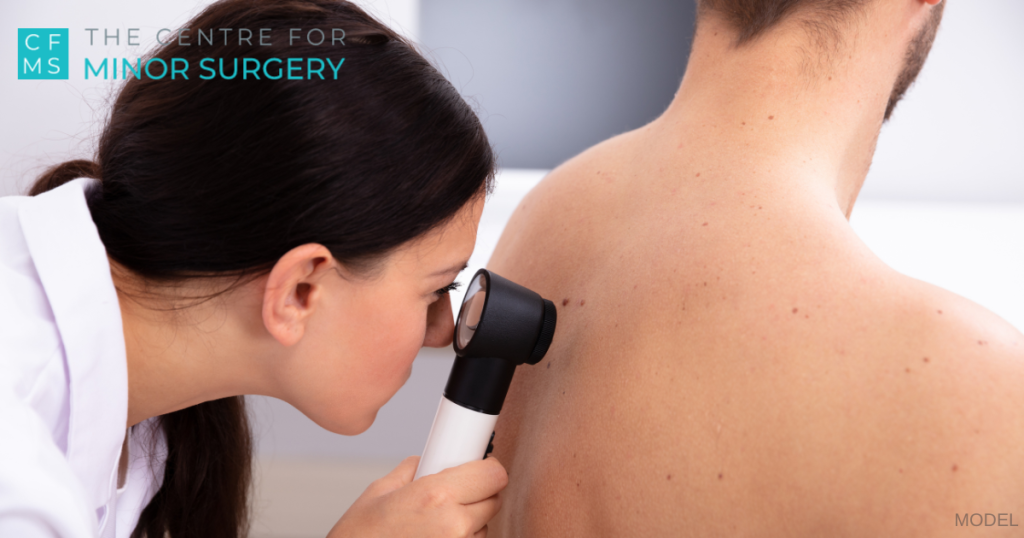
We understand that beauty marks on the face, such as moles, can be a point of frustration for many patients. Our Royal College-certified plastic surgeons often perform mole removal at the initial appointment, giving patients enhanced confidence while leaving the least noticeable scar possible.
In this post, we detail the steps you can take before, during, and after mole removal surgery to bring you peace of mind when choosing this procedure.
1. Identify Which Moles You’d Like Removed
Moles, also called beauty marks, are typically harmless. Some moles may present themselves from birth, while others may develop throughout your life. Moles that are benign (non-cancerous) may be left untreated or removed if you are experiencing irritation, such as rubbing against clothes, or you do not like how it affects your appearance.
The American Cancer Society explains what changes to look for during a skin self-exam and when to have a spot checked by a doctor.
2. Gather Your Questions
Before you visit your surgeon, make a list of any questions you have regarding the procedure. Our surgeons at The Centre for Minor Surgery will be happy to answer your questions, whether they’re about the mole itself, the types of removal surgery available, potential scarring, or the recovery process.
3. Visit Your Doctor
Your doctor should check any changing, suspicious, or new moles to make sure there are no signs of skin cancer, and that’s true for moles you want to have removed too. Your doctor will examine the unwanted mole and create a plan to remove it with the least amount of scarring.
At The Centre for Minor Surgery, your surgeon may perform the procedure during your first visit, or you may be asked to return another time to proceed with the removal procedure.
4. Have Your Procedure
Your doctor will first inject the area with a local anesthetic. This may sting a bit, but the numbing effect will set in to keep you comfortable during the removal. Depending on the mole you are getting removed, your surgeon may perform a shave excision or surgical excision.
For a shave excision, your surgeon will use a single or double-bladed razor to carefully shave the growth off until it reaches the level of the skin around it.
Surgical excision is very common for mole removal. After you have been numbed, your surgeon will use a scalpel to separate your mole from your skin, sometimes taking a bit of healthy skin when appropriate for the mole being evaluated. The surgeon may then apply pressure or cauterize the area to stop the bleeding before stitching it closed.
After the beauty mark has been removed, your surgeon will send it off for biopsy.
5. Follow Aftercare Instructions
Though healing relies heavily on the overall size and health of the removed mole, it will typically take 2 to 3 weeks to heal from the procedure. You can resume your daily activities immediately after your procedure but may notice some soreness around the area of removal. Your surgeon will provide you with complete instructions on how to care for your skin after the procedure, but you can find some of our top tips for mole removal aftercare.
For more information about beauty mark/mole removal and aftercare, request a consultation or call us at (416) 663-9649 to schedule an appointment.
Preparing for Mole Removal FAQ
What should I bring to my appointment?
Bring a list of your medications and any questions you have about the mole, removal process, or healing. Be ready to tell your surgeon when you first noticed the mole and whether it has changed. Continue taking your medications unless you’ve been instructed otherwise; if you’re unsure, call the office before your appointment.
Can I have more than one mole removed at the same appointment?
Possibly. Your surgeon will assess each mole and consider its location, the extent of the procedures, and how the areas will heal. Removing multiple moles on the same day is decided case by case, so mention all the moles you’d like evaluated when you book.
Does OHIP cover mole removal?
OHIP generally does not cover removal of a benign mole for cosmetic reasons. Coverage depends on the diagnosis, so your surgeon will examine the mole before discussing your options and costs. For more details about how much mole removal costs, read our related blog post.
Leave a Reply