
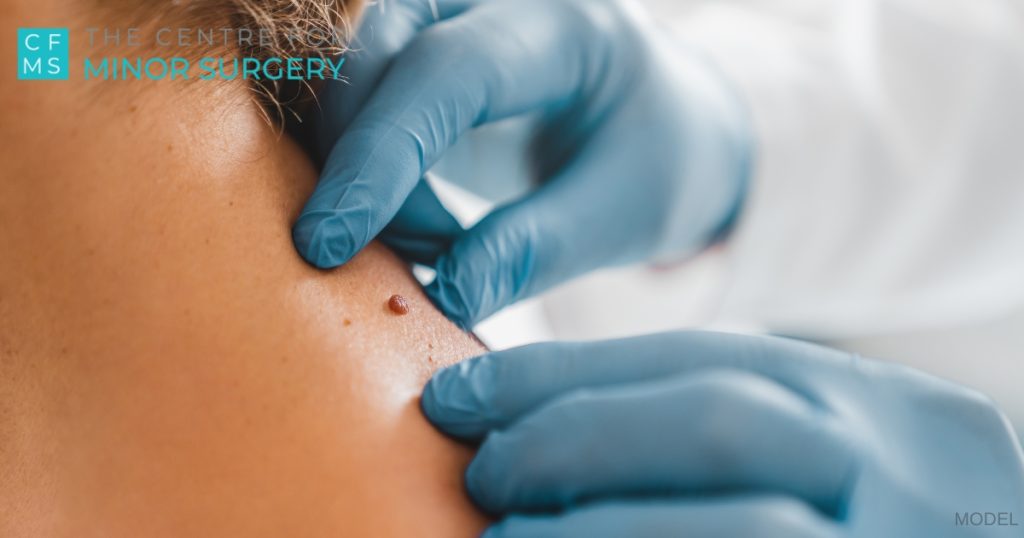
A skin tag is a benign, flesh-coloured growth that can occur on your face, neck, groin, or arms. They are usually harmless and form due to friction caused by your clothing or jewelry. Although a skin tag doesn’t cause discomfort, it can catch on clothing and cause embarrassment. If you feel embarrassed or self-conscious about your skin tag, you may want to consider removal.
Below are some things you need to know about skin tag removal.
Professional vs. At-Home Skin Tag Removal
Professional removal allows a healthcare provider to confirm that the growth is a skin tag before treating it. A mole or another skin lesion can sometimes resemble a skin tag and may require a different approach.
Cutting, tying off, or using chemicals to remove a growth yourself can cause bleeding, infection, burns, or scarring. Home removal may also delay diagnosis if the growth is something other than a skin tag.
If a skin tag bothers you, have it assessed and discuss removal with a qualified provider. Our guide to the risks of DIY mole removal explains why identifying a skin growth correctly matters before attempting any treatment.
See a Professional
Have a healthcare provider assess any growth you’re unsure about, especially if it changes in size or colour, becomes painful, or bleeds. Your provider will examine it and review your health history. Once they confirm that it is a skin tag, they can discuss whether removal is appropriate. Removal typically involves surgical excision.
Don’t hesitate to ask your provider questions about the procedure, recovery, and side effects so you feel comfortable about your decision to have your skin tag removed.
How Are Skin Tags Removed?
Healthcare providers can remove skin tags by cutting them off, freezing them, or treating them with an electrical current. The appropriate method depends on the growth’s size, location, and other individual factors.
- Snip or surgical removal: The provider removes the skin tag with sterile scissors or a surgical blade, using local anesthetic when appropriate.
- Cryotherapy: Liquid nitrogen freezes the skin tag, which falls off as the treated area heals.
- Electrodesiccation: An electrical current destroys the skin tag, leaving a small scab that heals over time.
At The Centre for Minor Surgery, skin tags are typically removed surgically. Your surgeon will first examine the growth to confirm what it is and recommend an appropriate approach.
Know What To Expect During the Treatment
Skin tag removal at our practice is a relatively easy and painless procedure, as you will be given an anesthetic prior to removal. In most cases, stitches are not required after the skin tag is removed. You can resume your regular routine after your procedure, and you’ll gently cleanse your skin as usual. To avoid irritation, cover the area with a bandage if it rubs against your clothing.
You can learn more about minor surgical procedures at our practice on our FAQs page.
It’s OK Not To Remove Your Skin Tag!
If you can easily hide your skin tag under your clothing, or if it doesn’t bother you, leave it alone! Skin tags are not contagious, so you don’t have to worry about passing them on to your friends and family. Just clean the area around the skin tag with your usual cleansing routine, and you should have no issues. However, it’s important not to scratch or pick at your skin tag, as it can lead to irritation or infection.
How Much Does Skin Tag Removal Cost & Does OHIP Cover It?
The cost of skin tag removal depends on the number of growths being treated and the extent of the procedure. At The Centre for Minor Surgery, we will provide a quote before treatment.
Skin tag removal at our clinic is not covered by OHIP, so patients pay out of pocket. Your surgeon can discuss the procedure and associated costs during your consultation.
Skin Tag Removal FAQs
Can I have multiple skin tags removed at once?
Possibly. Your surgeon will assess the number, size, and locations of the skin tags and determine whether they can be treated during the same appointment.
Will skin tag removal leave a scar?
A small mark or scar may remain after removal. Its appearance depends on the skin tag’s size and location and how your skin heals. Following your surgeon’s aftercare instructions is important for supporting healing.
Can skin tags grow back after removal?
A skin tag that was removed completely does not typically grow back. However, new skin tags can develop near your original skin tag site or in other places. If a growth appears at a previously treated site, have your provider assess it.
Do I need a referral for skin tag removal?
No referral is needed to book a consultation at The Centre for Minor Surgery. Your surgeon will examine the growth and discuss whether removal is appropriate.
Discuss Your Skin Tag Removal Options
Removing a skin tag is a fast and easy process. You can request a consultation using our online form or call us at (416) 663-9649 to schedule an appointment.
Leave a Reply